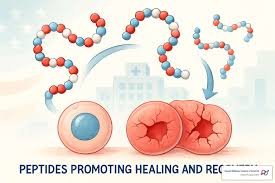
Peptides for Inflammation: How They Work & Why They’re Popular in 2025
Peptides for Inflammation: How They Work & Why They’re Popular in 2025
Peptides for inflammation. Inflammation is one of the most discussed topics in modern health and scientific research. Whether it involves injury recovery, immune response, tissue damage, or chronic stress, inflammation influences nearly every biological system.
In 2025, certain peptides have gained massive attention for their potential role in modulating inflammation, supporting recovery, and improving the body’s natural response to stress or injury.
Understanding Inflammation in Simple Terms
Inflammation isn’t a bad thing by itself — it’s a protective response.
It happens when the body:
-
detects an injury
-
recognizes irritation
-
responds to foreign molecules
-
begins repairing tissue
Problems occur when inflammation becomes:
-
too strong
-
too weak
-
too long-lasting
peptides for inflammation.
This is where peptides enter the conversation.
How Peptides Influence Inflammatory Pathways
Peptides can interact with:
-
cytokines
-
immune cells
-
growth factors
-
repair pathways
-
cellular signaling proteins
Through receptor binding, peptides may:
-
reduce excessive inflammatory responses
-
stimulate healing
-
improve blood flow
-
speed tissue repair
peptides for inflammation. -
regulate immune signaling
-
support recovery from stress or injury
Different peptides target different systems — some influence the immune system, others target tissue regeneration, and some affect both.
Top Peptides Studied for Inflammation in 2025
1. BPC-157 — Inflammation Modulation & Tissue Repair
BPC-157 is one of the most widely discussed peptides in inflammation-related studies. Research often highlights its potential ability to:
-
reduce inflammatory markers
-
support tendon and ligament healing
-
protect the gut lining
-
encourage new blood vessel formation
-
regulate nitric oxide pathways
Because inflammation is deeply connected to healing, BPC-157 appears in research involving injuries, digestive health, and musculoskeletal recovery. peptides for inflammation.
2. TB-500 — Inflammation Reduction Through Cell Migration
TB-500 (a synthetic version of thymosin beta-4) is another powerful peptide often referenced for inflammation support.
Studies explore whether TB-500 may:
-
enhance cell migration to injury sites
-
improve recovery speed
-
promote new blood vessel formation
-
reduce swelling around damaged tissues
It is especially common in studies involving muscle injuries, joint stiffness, or mobility issues where inflammation is a key factor.
3. Thymosin Alpha-1 — Immune Balance & Inflammatory Control
Thymosin Alpha-1 is a well-known peptide in immune research. Since inflammation and immune response are deeply connected, this peptide is widely studied for:
-
regulating immune cell activation
-
supporting balanced immune responses
-
reducing excessive inflammation
-
improving recovery from physical stress
This peptide appears in advanced immune-system research models.
4. Thymulin — Immune System Modulation
Thymulin is another immune-related peptide that often appears in research discussing:
-
inflammatory balance
-
immune cell communication
-
sensitivity of immune receptors
-
recovery from inflammation-based conditions
Researchers often pair Thymulin with Alpha-1 Thymosin in immune-focused studies. peptides for inflammation.
5. LL-37 — Antimicrobial & Anti-Inflammatory Peptide
LL-37 is one of the most interesting peptides in inflammation research due to its dual effects:
-
antimicrobial influence
-
inflammation modulation
It is heavily referenced in models involving:
-
skin healing
-
immune defense
-
tissue regeneration
-
chronic inflammation conditions
Because of its wide range of cellular effects, LL-37 is one of the most unique peptides discussed today.
6. CJC-1295 + Ipamorelin — Indirect Inflammation Benefits
While not direct anti-inflammatory peptides, growth-hormone–activating peptides like CJC-1295 and Ipamorelin can indirectly support inflammation control through:
-
deeper sleep
-
improved tissue repair
-
better cellular recovery
-
reduced oxidative stress
Chronic inflammation often improves when recovery systems function better — which is why GH peptides appear in recovery-oriented studies.
7. Epitalon — Longevity & Inflammation Regulation
Epitalon appears in longevity research, but it also shows up in studies exploring inflammation and cellular aging.
Areas of interest include:
-
improved DNA repair signaling
-
reduction in oxidative stress
-
better immune response coordination
-
anti-aging and recovery support
This peptide is considered both a longevity and inflammation-modulating molecule.
Why Inflammation-Focused Articles Rank Extremely Well
Google LOVES inflammation content because:
-
People search for inflammation every day
-
It ties into healing, fat loss, GH peptides, immune peptides, anti-aging… everything
-
It brings authority to your peptide store
-
It creates natural opportunities for internal links
-
It fills a high-value education niche
Also… very few stores write about this topic, so ranking is easier. peptides for inflammation.