
Description
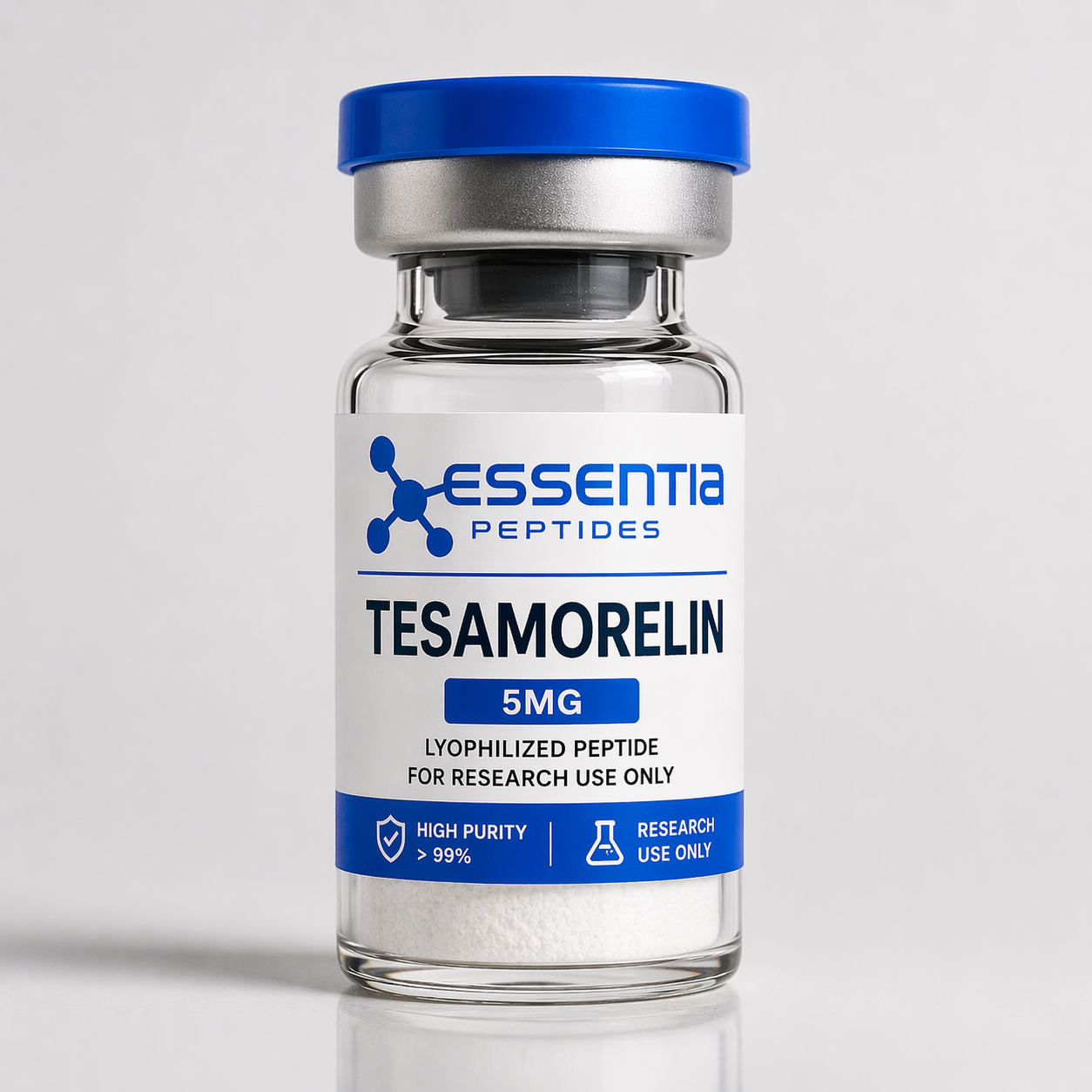
Tesamorelin peptide
Tesamorelin is a highly specialized Growth Hormone Releasing Hormone (GHRH) analog widely used in scientific research to study metabolic function, lipolysis, growth hormone secretion, and cellular regeneration. As a stabilized synthetic form of GHRH, It binds to the GHRH receptor (GHRH-R) in the pituitary gland, stimulating natural GH release and offering researchers a reliable model for studying endocrine and metabolic processes.
Because it has been shown in controlled studies to reduce visceral fat (VAT) and influence IGF-1 pathways, it has become one of the most investigated peptides in metabolic research. Its stability, predictable action, and high receptor affinity allow scientists to explore GH-driven mechanisms with precision.

Scientific Background
Tesamorelin is a modified 44-amino-acid peptide designed to mimic endogenous GHRH. Unlike shorter peptides such as Sermorelin or GRF 1-29, includes additional stabilizing modifications that improve:
-
Half-life
-
Binding strength
-
Resistance to degradation
-
Biological availability
These features make it a preferred peptide in experiments involving GH stimulation, metabolic signaling, and protein synthesis.
Key Areas of Research
1. Growth Hormone Secretion & Endocrine Studies
Tesamorelin is frequently used to study GH dynamics, including:
-
Pulsatile GH secretion
-
IGF-1 axis modulation
-
Pituitary responsiveness
-
Long-term GH signaling effects
Its clean interaction with GHRH receptors provides strong consistency in experimental outcomes.

2. Visceral Fat (VAT) & Metabolic Research
Tesamorelin is one of the most commonly used peptides in studies involving:
-
Fat oxidation
-
Visceral fat reduction
-
Metabolic rebalancing
-
Lipolytic pathways
Researchers use it to observe how GH stimulation influences fat distribution, energy expenditure, and glucose metabolism.
3. Cognitive & Neuroprotective Research
Some experimental studies investigate Tesamorelin’s impact on:
-
neurocognitive function
-
memory and neuronal repair
-
brain metabolism
This is due to GH and IGF-1’s known involvement in neural growth and protective pathways.
4. Cellular Repair & Regeneration Models
is used to explore:
-
protein synthesis
-
repair of muscle and connective tissues
-
anti-inflammatory processes
-
mitochondrial health
Its GH-stimulating mechanism makes it valuable in regenerative and recovery-oriented research.
Laboratory Specifications
-
Form: Lyophilized peptide powder
-
Purity: ≥99% (HPLC Verified)
-
Storage: –20°C recommended
-
Shelf Life: Long-term stability when stored properly
-
Use: Laboratory research only
Each batch is tested for purity and stability to ensure consistent results in scientific environments.
For Research Use Only
provided by EssentiaPeptides is not for human consumption. It is intended only for scientific, laboratory, and experimental research conducted under controlled conditions.


Lily –
Consistent quality and good customer handling.
Henry –
Noticed steady progress. Packaging was neat and delivery was on time.
Logan –
Works well and communication was professional throughout.
Harper –
Reliable product and polite service staff. Fast shipping.
Victoria –
Fast delivery and visible results. Overall satisfied.
Mason –
Satisfied with daily performance and results. Shipping was quick.
Isabella –
Product quality is solid and delivery arrived exactly as expected.
Owen –
Results are okay and product matches description.